 Kareem
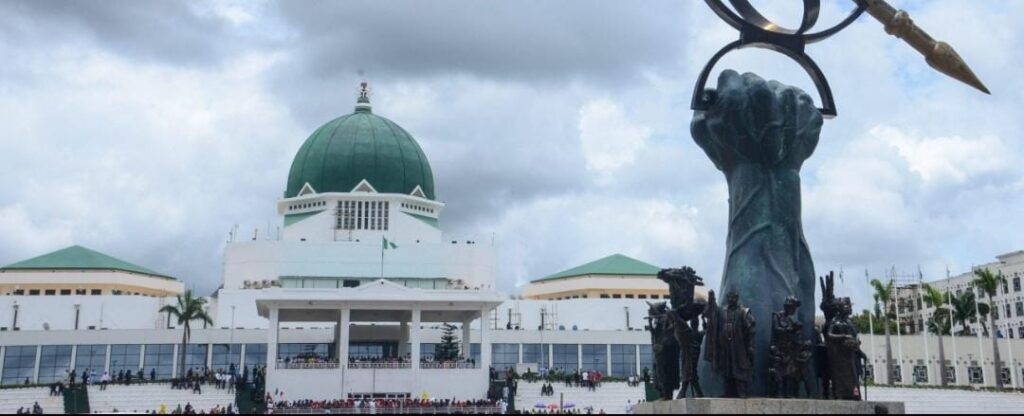
Nigeria practises a presidential system of government, with its constitutional powers shared among three main arms: the Executive, Legislature and Judiciary.
Under the Constitution of the Federal Republic of Nigeria, each arm performs specific duties. The Executive implements government policies and ensures the enforcement of laws, the Legislature is responsible for lawmaking, while the Judiciary interprets laws and settles legal disputes.
This arrangement is designed to prevent excessive concentration of power in one institution and promote accountability in the administration of the country.
Understanding how these three arms operate is important for every Nigerian because their decisions affect public services, national development, security, education, the economy and the protection of citizens’ rights.
But what exactly are the three arms of government, who leads them, and what responsibilities do they perform?
What Are the Three Arms of Government?
The three arms of government are the Executive, Legislature and Judiciary. They are separate institutions established under the Nigerian Constitution to perform different functions in the administration of the country.
The system is based on the principle of separation of powers, which means that government responsibilities are distributed among different institutions rather than concentrated in one authority.
At the federal level, these arms operate through the Presidency, the National Assembly and the courts. Similar structures exist at the state level through the offices of governors, state Houses of Assembly and state courts.
Although each arm has its own responsibilities, they also interact through constitutional procedures and checks and balances.
1. The Executive Arm of Government
The Executive is the arm of government responsible for implementing laws, administering public affairs and carrying out government policies.
At the federal level, executive powers are vested in the President of Nigeria, who serves as both the Head of State and Head of Government.
The President works with the Vice President, ministers, government agencies and other public officials to administer the country.
At the state level, executive powers are vested in the governor, who works with the deputy governor, commissioners and other government officials.
Functions of the Executive Arm
1. Implementation of Laws
One of the main responsibilities of the Executive is to implement laws passed by the Legislature. Once a law has been properly enacted, the Executive is responsible for ensuring that relevant government institutions carry out its provisions.
2. Formulation and Implementation of Government Policies
The Executive develops and implements policies intended to address national and state challenges. These may cover education, healthcare, agriculture, transportation, security, infrastructure and economic development.
3. Management of Government Ministries and Agencies
The President and governors oversee government ministries, departments and agencies through appointed officials. At the federal level, ministers supervise different sectors of government administration.
4. National Security and Defence
The President serves as Commander-in-Chief of the Armed Forces of the Federation. The Executive also oversees relevant security institutions responsible for maintaining law and order, protecting lives and safeguarding national interests.
5. Preparation of the Government Budget
The Executive prepares and presents budget proposals to the appropriate legislature for consideration and approval. At the federal level, the President presents the proposed annual budget to the National Assembly.
6. Conduct of Foreign Relations
The federal Executive manages Nigeria’s diplomatic relations with other countries, represents the country in international engagements and conducts foreign policy in accordance with constitutional provisions.
Who Leads the Executive Arm in Nigeria?
At the federal level, the President leads the Executive, while governors head the Executive in the 36 states of the federation.
The President is supported by the Vice President and ministers, while governors work with deputy governors and commissioners.
2. The Legislative Arm of Government
The Legislature is responsible for making laws, representing citizens and exercising oversight over government activities.
At the federal level, legislative powers are vested in the National Assembly, which consists of two chambers: the Senate and the House of Representatives.
The Senate represents the states of the federation and the Federal Capital Territory, while the House of Representatives represents constituencies based on population.
At the state level, legislative powers are exercised by the House of Assembly of each state.
Functions of the Legislative Arm
1. Making Laws
The primary responsibility of the Legislature is to make laws for the peace, order and good government of the country.
Members of the National Assembly introduce, debate, amend and pass bills before they can become laws in accordance with the Constitution.
State Houses of Assembly also make laws on matters within their constitutional authority.
2. Representation of Citizens
Legislators represent the interests and concerns of their constituents.
Senators, members of the House of Representatives and state lawmakers are expected to bring issues affecting their communities before the relevant legislative institutions.
3. Oversight of the Executive
The Legislature monitors the activities of government ministries, departments and agencies to promote accountability and transparency.
This oversight may involve public hearings, investigations, committee sessions and requests for explanations from government officials.
4. Approval of Government Spending
The Legislature considers and approves government budgets in accordance with constitutional procedures.
This gives elected representatives an important role in determining how public funds are allocated to different sectors and projects.
5. Confirmation of Certain Appointments
The Senate has constitutional responsibilities relating to the confirmation of certain appointments made by the President.
This includes ministerial appointments and other offices for which Senate confirmation is required by the Constitution or applicable laws.
6. Constitutional Amendment
The National Assembly and state Houses of Assembly participate in the process of amending the Nigerian Constitution, subject to the special voting and approval requirements set out in Section 9 of the Constitution.
Who Leads the Legislative Arm in Nigeria?
At the federal level, the President of the Senate leads the Senate, while the Speaker leads the House of Representatives.
Each state has its own Speaker, who presides over the state House of Assembly.
3. The Judicial Arm of Government
The Judiciary is responsible for interpreting the Constitution and other laws, resolving legal disputes and administering justice.
It serves as an important part of Nigeria’s democratic system by providing a legal avenue for individuals, organisations and government institutions to seek justice.
The Judiciary operates through courts established under the Constitution and other applicable laws.
At the federal level, the Supreme Court is the highest court in Nigeria. Other important courts include the Court of Appeal and the Federal High Court.
State judicial systems include State High Courts and other constitutionally recognised courts.
Functions of the Judicial Arm
1. Interpretation of the Constitution and Laws
Courts interpret constitutional provisions and legislation to determine how they should apply in particular circumstances.
This helps clarify legal questions and provides guidance on the meaning and application of laws.
2. Resolution of Disputes
The Judiciary settles disputes involving individuals, organisations, government institutions and different levels of government.
These disputes may concern property, contracts, constitutional issues, elections and other legal matters.
3. Protection of Fundamental Rights
Courts provide legal avenues for individuals seeking to enforce their constitutionally protected fundamental rights.
These rights include freedom of expression, personal liberty, freedom of movement and the right to a fair hearing.
4. Administration of Criminal Justice
The Judiciary hears criminal cases and determines whether accused persons are guilty or not guilty based on the evidence and applicable law.
It also imposes appropriate sentences where convictions are established.
5. Judicial Review
Courts have the authority to examine certain actions and decisions of government institutions to determine whether they comply with the Constitution and applicable laws.
Where an action is found to be unconstitutional or unlawful, a court may grant appropriate legal remedies within its jurisdiction.
6. Interpretation of Electoral and Constitutional Disputes
The Judiciary handles election-related cases and other constitutional disputes brought before it in accordance with the relevant legal procedures.
Who Leads the Judiciary in Nigeria?
The Chief Justice of Nigeria heads the federal judicial hierarchy.
At the state level, the Chief Judge heads the State High Court, while other courts are headed by their respective presiding judicial officers.
How Do the Three Arms of Government Work Together?
Although the three arms have separate responsibilities, they cannot operate entirely in isolation.
The Nigerian Constitution establishes procedures through which they interact, cooperate and exercise checks and balances over one another.
For example, the Executive may propose legislation, but the National Assembly must consider and pass a bill before it becomes law.
Similarly, a bill passed by the National Assembly generally requires presidential assent before becoming an Act. However, the Constitution provides a procedure through which the National Assembly may override a presidential veto.
The Legislature also exercises oversight over the Executive, while the Judiciary can determine whether actions taken by government institutions comply with the Constitution.
These arrangements are intended to promote accountability and ensure that public power is exercised within constitutional limits.
What Is the Principle of Separation of Powers?
Separation of powers is the constitutional principle that divides government responsibilities among the Executive, Legislature and Judiciary.
The idea is to prevent one institution from controlling all government powers.
In Nigeria, Sections 4, 5 and 6 of the 1999 Constitution, as amended, provide the constitutional foundation for the legislative, executive and judicial powers of government.
However, separation of powers does not mean that the three arms have no relationship with one another.
The Constitution allows certain interactions, including legislative approval of appointments, presidential assent to bills, budgetary procedures and judicial review.
These constitutional arrangements help maintain a balance between the different institutions.
Why Are the Three Arms of Government Important to Nigerians?
The three arms of government influence many aspects of everyday life.
The Executive is responsible for implementing policies and administering public services. The Legislature makes laws and represents citizens, while the Judiciary provides a means of resolving disputes and enforcing legal rights.
For example, when the government introduces a new policy, the Executive may be responsible for its implementation, while the Legislature exercises its lawmaking and oversight responsibilities. If a dispute arises over the legality of an action, the Judiciary may be called upon to determine the matter.
This division of responsibilities is important because democratic governance requires more than the existence of elected officials. It also requires institutions that operate within the law and remain accountable for their decisions.
Conclusion
The Executive, Legislature and Judiciary are the three major arms of government in Nigeria, each performing distinct but interconnected responsibilities.
The Executive implements laws and administers government affairs, the Legislature makes laws and oversees government activities, while the Judiciary interprets the law and resolves disputes.
Their roles are defined by the Constitution to promote accountability, protect democratic institutions and prevent the excessive concentration of government powers.
For Nigerians, understanding how these institutions work is an important step towards becoming informed citizens who can better understand government decisions, public policies and their constitutional rights.